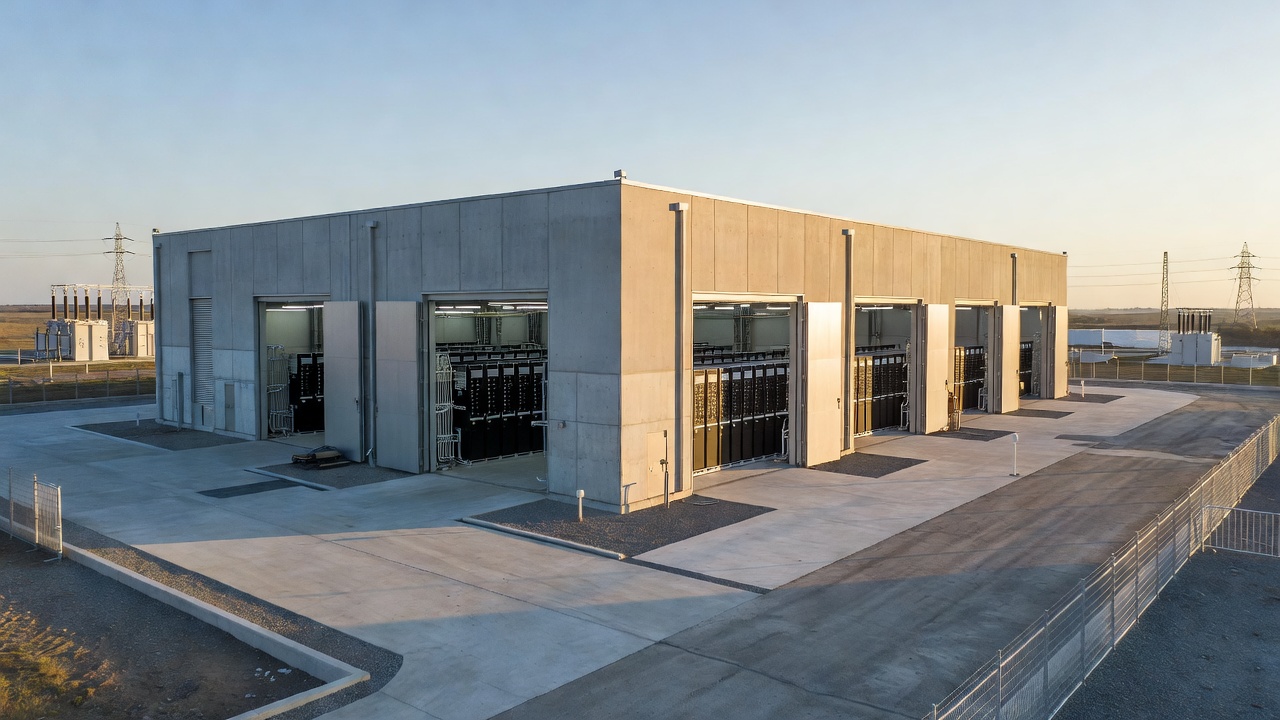
Design from the accepted inventory
The integration brief should begin with the assets that have actually been accepted, including their configuration and limitations. Designing around a generic battery and substituting used stock later can expose gaps in power capability, communications, thermal management and maintainability. The intended stationary service must remain explicit throughout design. Required energy at the point of use is not the same as the sum of nominal battery energy, because conversion losses, operating reserves, auxiliary loads and permitted operating limits affect what the installation can deliver.
Variation is a central design issue. Accepted batteries may differ in history, measured capability or future ageing behaviour even when their original model names match. The engineering team must explain how the architecture accommodates relevant differences and how replacement assets will be evaluated. Neither a shared chemistry label nor a similar capacity result establishes interchangeability. Procurement should therefore define acceptable configurations and evidence requirements rather than allowing unrestricted substitutions that bypass the original qualification and system design assumptions.
Make control ownership explicit
Battery management, power conversion and site energy management perform related but distinct functions. Their responsibilities, data exchange and response to faults need a coherent design. A site controller should not depend on assumptions about information that the battery system cannot reliably provide. Similarly, a protective function cannot be treated as an optional performance feature. Interface documentation should state what each component reports, which limits it enforces and how the completed system behaves when an expected signal or communication path is unavailable.
For planners, the critical question is not whether two devices can exchange messages in a demonstration. It is whether the integrated arrangement has been evaluated across its intended operating conditions and credible fault states. Version control matters because software, firmware and parameter changes can alter behaviour after acceptance. A responsibility matrix should identify who owns interface specifications, who approves changes and who resolves conflicting requirements. These records become essential when maintenance introduces replacement equipment or when a later operational event requires reconstruction.
Evaluate the complete installation
The site introduces constraints that a battery qualification report cannot resolve by itself. Access, occupancy, neighbouring assets, environmental exposure, fire strategy and emergency arrangements all influence the design. IEC 62933-5-2 addresses safety requirements for grid-integrated electrochemical energy storage systems. In relevant markets, UL 9540 concerns energy storage systems and equipment, while UL 9540A is a test method for evaluating thermal runaway fire propagation. These are different references with different purposes; one should not be presented as a universal substitute for the others.
NFPA 855 addresses installation of stationary energy storage systems within its applicable context. Local adoption, authority requirements and project conditions still need confirmation. In Great Britain, the Health and Safety Executive provides relevant workplace safety guidance, while distribution connections may involve the Energy Networks Association's Engineering Recommendations G99 or G98, depending on the installation. A connection agreement, a planning decision and a safety evaluation answer different questions. Approval in one area should not be represented as blanket permission for every aspect of the project.
| Boundary | Planning question |
|---|---|
| Battery | Which assets and limitations were accepted? |
| System | Which integrated configuration was evaluated? |
| Site | Which local hazards, permissions and responsibilities apply? |
| Network | What connection and operating conditions have been agreed? |
Close the design-to-service gap
Commissioning should establish that the installed system matches its approved design and is ready for the agreed service. Its scope and methods require competent definition; this page does not offer executable test instructions. The planning requirement is a traceable record of what was verified, what configuration was present, what exceptions remained and who authorised release. Open issues should have clear owners, and a system should not acquire an unrestricted operational status merely because a construction milestone has been reached.
The operating team needs more than drawings. Handover should include the accepted operating envelope, maintenance responsibilities, alarm ownership, escalation arrangements, training requirements and configuration records. Performance guarantees should identify their measurement boundary and exclusions so that later reports compare like with like. Retirement planning also belongs here: access for eventual removal, ownership of records and responsibility for lawful end-of-life management are easier to establish before service starts. Good integration makes the next stage manageable rather than passing undocumented complexity to operators.
Reference points
- IEC: energy storage safety standards
- UL Solutions: energy storage system evaluation
- NFPA: stationary energy storage installation standards
- Health and Safety Executive
- Energy Networks Association